Why Preventive Sign Maintenance Saves More Than Emergency Repairs
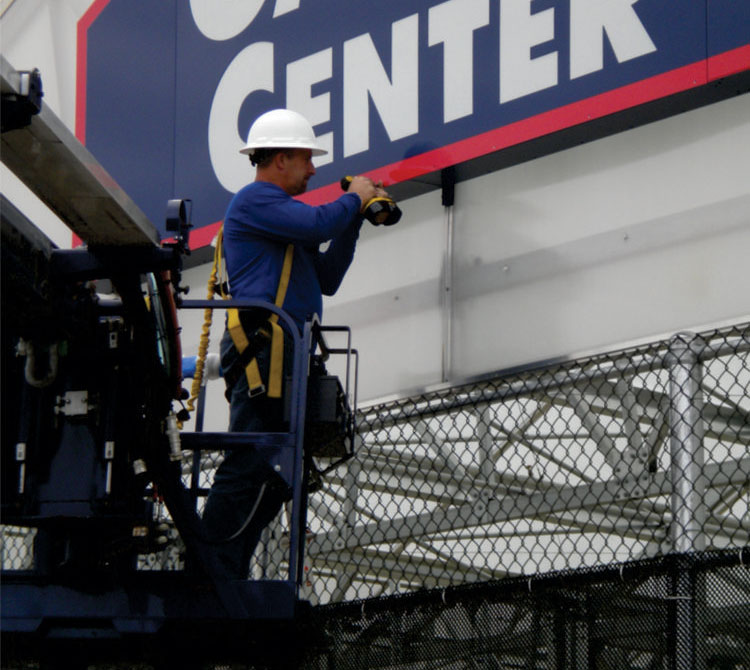
Key Takeaways:
- Emergency repairs carry a 3–5x cost multiplier — After-hours labor, rush parts, and trip charges turn a $450 fix into a $2,000 problem.
- Preventative programs cut total maintenance spend by 30–40% — Scheduled inspections, bulk parts ordering, and route optimization deliver compounding savings.
- Dark signs cost more than the repair — Lost foot traffic, brand perception damage, and liability exposure far outweigh the price of a service call.
- Every $1 in preventative maintenance returns roughly $5 — Most programs show positive ROI within 12–18 months, with savings compounding each year.
- Documentation protects you legally and financially — Photo records and inspection logs support insurance claims and demonstrate regulatory due diligence.
There are few things more stressful than unexpected business crises. For instance, what do you do when the opening manager of one of your highest-grossing locations can’t seem to get the building’s channel letters to light up?
You scramble to find a technician who can take an emergency call. The after-hours rate is 2.5 times the standard rate. And the replacement LED modules need to be overnighted, so that’s a 50% markup on parts.
By the time the sign is back on, you’ve probably spent four to five times what a scheduled repair would have cost.
But the real damage comes to your brand reputation. The customers who drove past a dark storefront and their new perception that your brand is struggling? That impact may be harder to calculate, but no less expensive.
This is the math of reactive maintenance. And for brands managing dozens or hundreds of locations, it’s a math problem that compounds fast.
There’s A Real Cost Gap Between Planned and Emergency Repairs
Industry numbers consistently show that emergency sign repairs cost three to five times more than the same work performed on a planned schedule.
Premium labor rates for after-hours dispatch and rush delivery surcharges on parts are the primary cost drivers. Plus, the inability to batch nearby locations into a single service trip.
Think about a simple LED module replacement. When it’s done during a scheduled quarterly inspection, it typically runs $400–800. But that exact same repair, when done during a 2 am emergency call, could land between $1,500 and $3,000.
Now multiply that gap across a portfolio, and you’ll quickly see the problem. Most facilities teams spend 60–70% of their maintenance budget on reactive repairs. Even a portion of that spent shifted toward prevention can reduce overall maintenance costs by 30–40%.
But direct repair costs are only part of the picture.
The Damage Dark Signs Are Doing to Your Brand
A burnt-out sign doesn’t just need a repair. It sends a message.
Customers driving past a dark or flickering storefront make quick judgments: Are they even open? Is this business struggling?
For restaurants and QSRs, that’s a drive-by customer choosing a competitor.
For gas stations and C-stores, it’s a visibility and safety concern that affects both customers and insurers.
There’s also a liability dimension. A corroded mounting bracket that finally fails could lead to personal injury claims and property damage, not to mention regulatory citations.
Documented inspection programs serve double duty here. They catch problems before they become dangerous, and they create a paper trail of due diligence that protects you if something does go wrong.
Invest in Preventive Maintenance to Catch Costly Issues Early
We’ve been in this business for quite some time, and we’ve seen it all. We’ve also seen that signage failures (outside severe weather) don’t happen overnight. They follow a predictable pattern of small, detectable warning signs that escalate when ignored.
LED and Electrical Degradation
LED modules dim, shift color, or flicker well before they fail completely. Electrical connections loosen from thermal cycling. A trained technician during a scheduled inspection spots these issues weeks or months before they result in a dark sign.
Corrosion and Seal Failure
Moisture intrusion through deteriorating seals is the silent killer of sign longevity. When left unchecked, surface rust can go from a cosmetic issue to a structural one. It’s well worth an annual inspection.
Storm Damage Escalation
A small crack in a sign face after a windstorm is a $400 repair. Ignore it, and water enters through the crack. That water then damages electrical components and rusts the frame.
Suddenly, what started as a minor fix becomes a costly replacement. Post-storm inspections within 48 hours are one of the highest-ROI activities in any maintenance program.
Mounting Hardware Fatigue
Bolts loosen. Welds fatigue. Foundations shift. These aren’t dramatic failures — they’re gradual ones that scheduled torque checks and structural assessments catch long before they become safety hazards.
How to Prioritize When You Can’t Inspect Everything at Once
Not every sign in your portfolio needs the same attention. A tiered approach lets you allocate your maintenance budget where the financial and brand impact is highest.
- Tier 1 — Monthly inspections: Flagship locations, high-traffic pedestrian areas, signs with safety implications, and any location with a history of repeat failures.
- Tier 2 — Quarterly inspections: Standard retail and restaurant locations with illuminated signage in moderate-traffic areas.
- Tier 3 — Bi-annual inspections: Lower-traffic sites, non-illuminated signs, and newer installations with clean track records.
Don’t forget about climate impacts. Coastal locations, snowbelt regions, and high-wind corridors require higher inspection frequencies than protected inland sites.
Atlas Sign Maintenance Programs Pay for Themselves
At Atlas Sign Industries, sign maintenance isn’t an afterthought — it’s one of the core reasons national brands trust us with their signage needs.
We’ve built our maintenance infrastructure around the principle that protecting your signage investment is as important as making it in the first place.
Nationwide service coverage: Our maintenance network spans 20K+ retail sites, with technicians and service partners positioned to reach your locations nationwide.
Centralized asset tracking: We document every sign at every location — type, age, condition, maintenance history, and warranty status – so you know exactly what you need, and when.
Tiered inspection programs: We work with your team to classify locations by risk and business impact – creating a program management approach that allocates your maintenance budget where it delivers the highest return.
Full-service repair capability: When inspections identify issues, our in-house manufacturing and installation teams handle the repair — no handing off to a third party, no delays waiting for another vendor’s schedule. One partner, one process, from inspection through resolution.
Sign failures aren’t random. They follow patterns that scheduled inspections catch early and planned repairs fix affordably.
If you’re ready to see how a structured maintenance program could reduce costs across your portfolio, contact Atlas today for a maintenance assessment. We’ll review your current spend, identify your highest-risk locations, and show you the path from reactive to proactive.