Designing Signage for Healthcare Environments: Safety, Simplicity, and Compliance
Key Takeaways
- Healthcare signage directly impacts patient outcomes: Clear wayfinding reduces stress, saves staff time, and improves punctuality for medical appointments
- ADA compliance is non-negotiable: Proper tactile signage, contrast ratios, and mounting heights ensure equal access while protecting facilities from legal risks
- Simplicity beats complexity: Large fonts, high contrast, universal symbols, and plain language work better than medical jargon for stressed patients and visitors
- Atlas delivers scalable solutions: From single clinics to 1,000+ hospital networks, comprehensive design through maintenance means compliant and effective healthcare signage
Healthcare facilities and clinics are among the most important locations for many, yet trying to figure out where to go and how to navigate them can be frustrating.
When you’re already stressed and in need of medical attention, the last thing you want to worry about is navigating a confusing space!
Navigation issues play out daily across healthcare facilities nationwide. And while it might seem like a minor inconvenience, poor signage in healthcare environments creates ripple effects that impact everything from patient satisfaction to operational efficiency to legal compliance.
At Atlas, we’ve worked with healthcare providers and locations to upgrade and enhance their signage to boost the overall experience of patients and visitors alike.
Read on to learn some of our top tips and justifications for investing in better healthcare signage.
Healthcare Signage Is Different from Every Other Industry
We work with many industries to provide excellent modern signage, and here’s the reality: healthcare is incredibly unique.
Modern healthcare environments create unique signage challenges that don’t exist in other industries, such as retail, hospitality, or corporate offices.
Patients arrive stressed, often in pain, and frequently unfamiliar with medical terminology. And unlike customers choosing where to shop, patients typically have limited choice in where they receive care – making first impressions crucial for satisfaction and trust.
The Stress Factor in Healthcare Signage
When individuals arrive at your location already worried about their health, their cognitive capacity for processing complex information is already low.
Signage that might work fine in a shopping mall becomes completely ineffective in a medical setting. When readers are operating under emotional and physical stress, they can’t readily remember complicated instructions or decipher confusing symbols.
This means healthcare signage must be more intuitive, more forgiving, and more accessible than signage in any other environment.
The Compliance Reality
You’re dealing with a double-edged sword in healthcare. Not only do you want to help your patients, but you’re also under strict regulatory oversight that extends to signage requirements.
ADA compliance isn’t optional – it’s federally mandated. And beyond federal requirements, state and local health department regulations often impose additional signage standards for safety and accessibility.
Non-compliance risks more than just patient satisfaction – it opens facilities to legal liability and regulatory penalties that can impact operations and reputation.
The Three Pillars of Effective Healthcare Signage
1. Safety
Effective healthcare signage creates a clear traffic flow that supports both routine operations and emergency procedures.
This includes obvious elements like emergency exit signs, but extends to traffic management that prevents bottlenecks in critical areas.
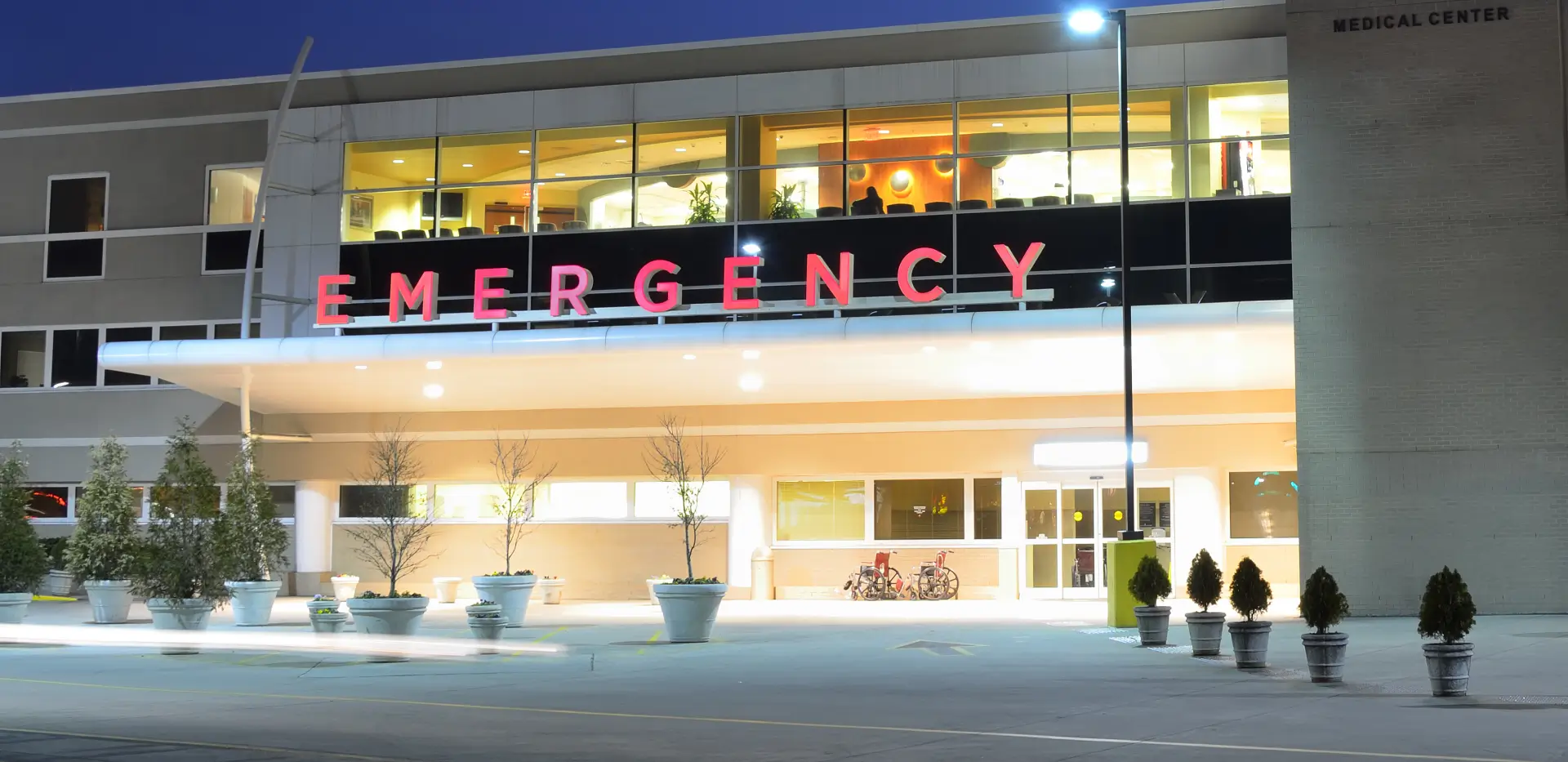
Think about how signage directs ambulance traffic to emergency entrances or guides families to waiting areas during surgeries. Think about staff who must make instantaneous decisions when moving quickly between departments during urgent situations.
Every sign should contribute to the overall safety and efficiency of the facility.
2. Simplicity
The best healthcare signage communicates clearly to everyone. That means you’ll need to strike the perfect balance, regardless of your education level, language proficiency, or stress level. This means:
- Large, clear fonts with high contrast that remain legible even for patients with vision impairments or those reading while walking quickly down corridors.
- Universal symbols and pictograms that transcend language barriers and support patients with limited literacy or those for whom English isn’t their first language.
- Plain language instead of medical jargon because “Cardiology” might mean nothing to a patient who just knows they have “a heart problem.”
- Consistent visual language using the same colors, fonts, and design elements throughout the facility to reduce cognitive load and build familiarity.
Simplicity doesn’t mean sacrificing clarity. You need to find a balance between creating a visually appealing design and ensuring that important information is easily understood by all patients. This becomes even more important when it comes to stress levels.
3. Compliance
ADA-compliant signage ensures equal access for all patients while protecting healthcare facilities from legal risks. Some of the key requirements to include are:
- Tactile elements with raised characters and Braille positioned between 48 and 60 inches from the floor, adjacent to the door latch side for accessibility.
- High-contrast, non-glare finishes that enhance readability under various lighting conditions commonly found in medical facilities.
- Proper mounting specifications that consider wheelchair accessibility, pedestrian traffic flow, and emergency evacuation procedures.
- Pictograms with descriptive text ensure universal understanding while meeting federal accessibility standards.
These aren’t just legal checkboxes you’re trying to meet. Each of these is a fundamental design principles that make healthcare facilities more welcoming and accessible to all patients.
How Atlas Delivers Healthcare Signage at Scale
Having the right signage is a significant need. That’s why healthcare organizations need signage partners who understand both the challenges of medical environments and the complexities of managing projects across multiple facilities.
Whether you’re updating a single clinic or rebranding a nationwide hospital network, Atlas Sign Industries is here to help. Our team of experts has extensive experience in delivering healthcare signage at scale.
Comprehensive Assessment and Planning
Every effective healthcare signage project starts with understanding how people actually move through your facility.
Our team conducts detailed site surveys, stakeholder interviews, and wayfinding audits to identify problem areas and opportunities for optimization.
This assessment considers patient flow patterns, staff workflow requirements, emergency procedures, and accessibility needs. Our goal is to develop signage systems that cater to the diverse needs of everyone who may step through your doors.
Patient-Centric Design Approach
Our design process combines your branding with the patient experience – all while maintaining brand consistency and regulatory compliance.
This means creating signage that reduces anxiety rather than adding to it. We use design elements that feel welcoming rather than clinical and organize information in ways that make sense to people under stress.
Regulatory Expertise and Compliance Management
Healthcare facilities operate under complex regulatory requirements that vary by state, facility type, and patient population.
From ADA compliance to local health department regulations, we handle the compliance complexity so you can focus on patient care.
Our comprehensive permitting services efficiently work through regulatory approvals, preventing delays that could impact facility operations.
Manufacturing and Installation Excellence
Healthcare signage must withstand constant cleaning, high traffic, and demanding use conditions while maintaining a professional appearance.
Our manufacturing processes use healthcare-appropriate materials designed for durability and easy maintenance.
Installation coordination minimizes disruption to patient care activities, working around operational schedules to ensure signage updates don’t interfere with critical medical services.
Ready to Transform Your Healthcare Environment?
Healthcare signage can’t be limited to just about pointing people in the right direction. Your signage must be part of a larger strategy that helps build an environment of care and compassion.
At Atlas Sign Industries, we’ve helped healthcare facilities nationwide create signage systems that enhance patient experience while meeting the strictest compliance requirements.
Whether you’re planning a new facility, updating existing signage for compliance, or managing a multi-location rebranding project, we’ll help you create signage that puts patients first while supporting your operational goals.
Schedule Your Healthcare Signage Consultation